
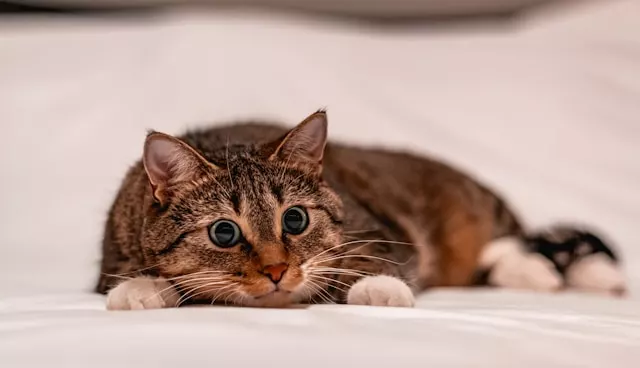
My cat Cleo has this thing she does every time I come home. She runs to the exact spot on the kitchen counter where I put her treats—not the treat jar, not the cabinet, but the exact spot where I set them down five minutes ago. Is she remembering, or is it just habit? And if I left for a week instead of a few hours, would she still recall that spot? Would she remember me?
What do cats remember? I’ve been going back and forth on this question for years, watching my own cats and reading whatever I could find. Turns out, science has been asking the same questions—and the answers are way more interesting than “cats have a short attention span.” If you want the full picture of cat behavior, memory is one of the most misunderstood pieces.
Short-Term Memory vs. Long-Term Memory: What Cats Actually Keep
First off, let’s clear up the biggest myth floating around: cats don’t have a 27-second memory. That number comes from a single study on dogs back in the 1960s, and it stuck around like a bad smell. The reality is a lot more nuanced.
A cat’s short-term memory—what scientists call “working memory”—holds onto useful information for anywhere from a few seconds to about 16 hours, depending on what it is and how much it matters. If you move a piece of furniture, your cat will notice immediately. If you hide a toy under the couch, they’ll remember where it was for a good while. But the random shadow that passed by the window three minutes ago? Gone.
Quotable: Cats’ short-term memory can hold information for up to 16 hours when the experience is useful or emotionally significant—far longer than the popular “27-second” myth suggests.
Long-term memory is where things get really interesting. Do cats have good memory? PetMD’s veterinary team explains that cats store long-term memories much like dogs and humans do—through the hippocampus, the same brain structure that handles memory formation in us. These memories can last years, sometimes a decade or more. That’s why a cat who had a bad experience at the vet can still panic at the scent of antiseptic years later, and why a rescue cat who finally trusts you after months of patience builds a bond that doesn’t just evaporate.
What Cats Remember About People
Here’s the part most of us actually care about. Do cats remember us? The short answer: absolutely.
A landmark study from the University of Tokyo, published in Scientific Reports, found that cats can distinguish their own names from other words—even when spoken by someone who isn’t their owner. The same research team later showed that cats learn the names of their friend cats in the same household. If your cat knows that “Whiskers” refers to the other cat in the room, they’re not just reacting to sounds—they’re forming associations that require memory.
Quotable: Research from the University of Tokyo confirmed that cats recognize their own names and can learn the names of other cats they live with, demonstrating a capacity for social memory that goes beyond instinct.
And it’s not just names. Saho Takagi—who led a 2017 study at Kyoto University—showed that cats can remember “what” and “where” from a single experience. In the experiment, cats remembered which bowl contained food and where it was located, even after a delay. This is what researchers call episodic-like memory: the ability to recall specific events, not just general patterns.
So when Cleo remembers that exact spot on the counter where I put her treats? That’s not just habit. That’s her brain pulling up the “what” and “where” of a previous treat session. And when I walk through the door after a week away and she comes running? She’s retrieving the memory of who I am—not just chasing a familiar smell. If you’ve ever wondered do cats worry about their owners, the memory research backs up what your gut already told you: they do, in their own way. And when they’re gone for a while, they absolutely miss their owners too.
What Cats Remember About Places and Routines
Cats are obsessive students of their environment. They don’t read clocks, but they know that the sun hitting the living room floor at 4 PM means you’ll be home soon. They know the sound of your car engine, the pattern of your footsteps, the jingle of keys that signals departure.
The Humane Society’s resource on cat behavior notes that cats thrive on routine and predictability—disruptions to their daily rhythm can trigger stress behaviors like hiding, over-grooming, or refusing food. This attachment to routine is memory in action. Your cat isn’t just “used to” you feeding them at 7 AM; they remember that food arrives at that time, and their body prepares accordingly.
Spatial memory is particularly sharp. You’ve probably seen this yourself: a cat who navigates a multi-story house to find their favorite sunbeam, or one who remembers which neighbor’s yard has the friendly dog and which has the hostile one. Cats map their territory with remarkable precision, and those mental maps persist for years. The ASPCA’s overview of common cat behavior issues confirms that many “problem behaviors”—like inappropriate scratching or litter box avoidance—stem from remembered negative associations with specific locations or objects.
Quotable: Cats build detailed mental maps of their territory that can persist for years, and they form strong emotional associations with specific people, places, and experiences within that territory.
What Cats Don’t Remember Well
Not everything sticks. Cats don’t hold grudges the way humans do—they don’t sit there stewing about the bath you gave them three Tuesdays ago. What they do remember is the emotional association: “wet = unpleasant,” not “you deliberately soaked me on February 14th.”
They also don’t remember abstract concepts or arbitrary sequences. A cat can learn that the sound of a can opener means food, but they won’t remember that you told them “no” about the counter four times yesterday—which explains a lot about why cats ignore commands. The memory isn’t organized that way. Consistent environmental feedback—like a motion-activated air sprayer—works better because it creates a memory that “counter = startling” regardless of whether you’re in the room.
When Memory Fades: Aging Cats and Cognitive Decline
Just like us, cats’ memories can fade with age. Penn Vet’s animal behavior clinic has published detailed guidance on aging cats and cognition, noting that behavioral changes in senior cats—disorientation, altered sleep cycles, increased vocalization at night—often signal cognitive decline rather than “just getting old.”
VCA Animal Hospitals offers practical advice on helping senior cats age gracefully, emphasizing that early detection of cognitive issues can make a meaningful difference. The Morris Animal Foundation has funded research into cognitive decline in cats, exploring how stress and inflammation affect the aging feline brain. The takeaway? If your 14-year-old cat seems lost in familiar rooms or forgets where the litter box is, it’s not “just being a cat”—it’s a medical issue worth discussing with your vet.
So What’s the Bottom Line?
Your cat remembers you. They remember your voice, your scent, the way you scratch behind their ears, and the sound of the treat bag rustling. They remember which window gets the best afternoon sun and which visitor brings the scary dog. They remember the vet’s office, the foster home they lived in before you adopted them, and the exact spot on the counter where you always put their food bowl.
They don’t remember in words, and they don’t sit around reminiscing. But every time your cat greets you at the door, curls up in your lap, or runs to their favorite spot at feeding time, they’re drawing on a memory system that’s more sophisticated than most people give them credit for. Those small daily rituals—the morning brush, the afternoon play session, the favorite toy they carry around—all become part of the mental map your cat builds and keeps.
If you’ve been wondering whether your cat remembers the good stuff—the late-night cuddles, the lazy Sunday afternoons, the way you nursed them back to health—the answer is almost certainly yes. They may not remember the calendar date, but they remember how you made them feel. And that’s what matters most.