
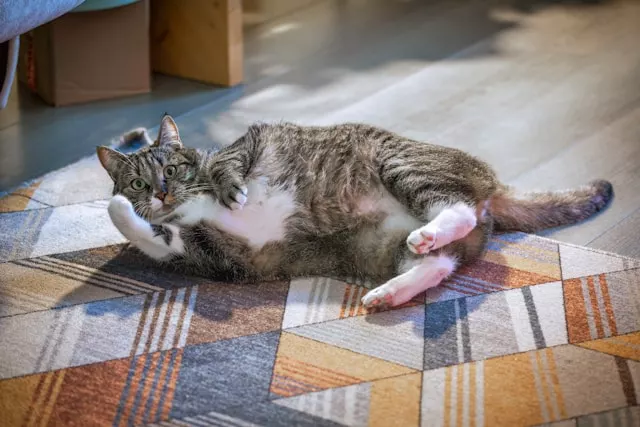
You come home from work and your cat greets you at the door with a loud meow, rubbing against your legs like they haven’t seen you in months. Or maybe they barely glance up from their nap, pretending they don’t care. Either way, you’ve probably wondered: do cats worry about their owners when we’re gone?
Turns out, the answer is a resounding yes. And the science behind it is more fascinating than most cat parents realize.
The Old Myth: Cats Are Too Independent to Care
For decades, we’ve bought into the idea that cats are aloof, solitary creatures who tolerate us more than they actually bond with us. Dogs get all the credit for loyalty. Cats get labeled as indifferent roommates who show up for dinner and leave.
But that narrative crumbled quickly once researchers started studying the actual science.
In 2019, a landmark study published in Current Biology tested 78 cats using a modified version of the “Strange Situation Test” — the same method psychologists use to measure attachment between human infants and their caregivers. The results? 64 percent of cats showed a secure attachment to their primary caregiver, similar to the 60 to 65 percent seen in human babies.
That’s not indifference. That’s a bond.
What “Secure Attachment” Actually Looks Like
A secure attachment doesn’t mean your cat throws themselves at your feet every time you walk through the door. Cats express attachment differently than dogs. But the underlying mechanism is the same.
Research from Oregon State University demonstrated that cats classify into the same main attachment styles as babies and dogs — secure, anxious, and avoidant.
A securely attached cat uses their owner as a safe base. They’ll explore, play, and hang out independently. But they consistently check back in with their human. When stressed or scared, they seek out their caregiver for comfort.
Cats actively initiate and maintain social interactions with their owners through vocalizations, scent marking, and physical proximity, according to a 2021 review published in Frontiers in Veterinary Science. They don’t just coexist with us. They choose us.
Here’s a fact worth remembering: cats with secure owner attachments show significantly lower stress hormone levels and higher oxytocin — the same “bonding hormone” that flows between human parents and children.
How Cats Show They Miss You
Some signs are pretty obvious. Your cat might:
- Vocalize excessively when you leave or return
- Destroy items around the house during your absence
- Eliminate outside the litter box — specifically on your bedding or clothes
- Follow you around more than usual before you leave
These behaviors are textbook signs of feline separation anxiety, notes PetMD — a genuine stress response tied to a specific person. It’s not neediness. It’s love — expressed through distress.
A comprehensive review on PubMed Central confirmed that cats demonstrate distinct behavioral patterns when anticipating their owner’s return, including increased vocalization and pacing near entry points.
Other signs are subtler. Your cat might greet you at the door with an extended sniff. Or spend the first ten minutes of your return sitting on your lap, like they’re confirming you’re still there.
Nearly 4,000 cat owners surveyed by the University of Lincoln reported that the majority of cats exhibit clear behavioral changes when their preferred human is absent.
The Chemistry of Cat‑Owner Bonding
It’s not just behavior. There’s actual chemistry happening between cats and the people they care about.
Oxytocin levels in both cats and their humans rise during friendly contact — petting, gentle talking, and close proximity all trigger the response. This is the same biochemical feedback loop that drives bonding between mothers and babies.
ScienceAlert reported on research showing that stroking a cat and speaking to them in a soft tone triggers measurable increases in oxytocin for both parties. The more affectionate the contact, the higher the hormone spike. Your cat literally feels chemically connected to you.
Can Cats Sense When Their Owner Is Sick or Upset?
Many cat owners report that their pets seem to sense when something is wrong — when they’re sick, grieving, or emotionally distressed. Cats notice changes in routine, shifts in body chemistry, and subtle alterations in voice tone and movement patterns.
As noted in VCA’s guide on separation distress, cats display clear behavioral changes when separated from their attachment figures — a pattern that supports the broader observation that cats worry about their owners.
Cats can experience separation-related distress when their owners are away, confirms ASPCA — and they often show it through behavioral changes like increased vocalization, hiding, or inappropriate elimination.
What This Means for You
If you’ve ever felt guilty leaving your cat alone for a few hours, take a breath. Your cat absolutely notices. They absolutely care. And they’re probably thinking about you just as much as you’re thinking about them.
The fact that your cat worries when you’re gone isn’t a sign of weakness. It’s proof that you’ve built something real.
That bond even leaves a vocal fingerprint — every cat develops its own dialect, shaped by its biology, its environment, and most importantly, its relationship with you.
For cats showing mild separation anxiety, environmental enrichment goes a long way. Interactive toys, puzzle feeders, and consistent routines help cats feel secure even when their preferred human is temporarily absent. A comfortable bed and a scratching post from Purrfellow can give your cat a familiar, reassuring presence while you’re away.
The Bottom Line
Do cats worry about their owners? The evidence is overwhelming: yes, they do. They form secure attachments, show measurable biochemical bonds, display clear distress when separated, and actively respond to their human’s emotional state.
Your cat isn’t just living with you. They’re bonded to you. And that’s something worth celebrating.